What is it that makes a painting powerful enough to heal an entire country? Is it technical brilliance, or is it something deeper—something that speaks not just to individuals, but to a wounded nation searching for its identity?
Mexico, 1920. A decade of revolution has torn the country apart. Cities lie scarred. The gap between the wealthy elite and the impoverished majority has never been wider. The people are exhausted, divided, and uncertain about what it even means to be Mexican. The new government faces a monumental question: how do you rebuild a nation that has forgotten who it is?
The answer arrived not in the form of political speeches or military campaigns, but on the walls of public buildings—massive, breathtaking murals visible to anyone who walked the streets.
This was the birth of Mexican Muralism, and it changed everything.
Art has always reflected the human experience, and Mexico’s experience in the early twentieth century was one of pain, resilience, and hope. A visionary education minister named José Vasconcelos understood something profound: if the people couldn’t read, art would teach them. If the nation lacked unity, art would create it. He commissioned artists to paint the country’s story on its most important buildings—not for collectors in galleries, but for the farmers, workers, and children passing by every day.
This is why muralism emerged. It was art as education. Art as identity. Art as survival.
The Mexican Muralism movement found its soul in three extraordinary figures: Diego Rivera, José Clemente Orozco, and David Alfaro Siqueiros. Each brought a distinct vision, yet they shared an unshakable belief that art belonged to the people.
Imperfection gave this art its power.
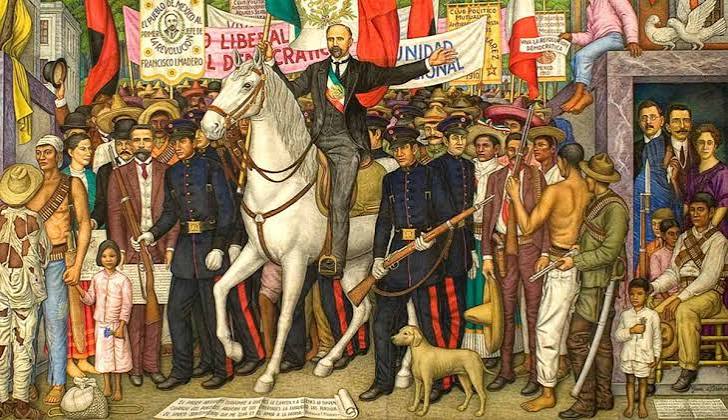
The murals were raw, sprawling, and unapologetically political. They celebrated Indigenous culture—the Aztecs and Mayans—whose traditions had been suppressed for centuries. They honored the farmers and workers who had fought in the revolution. They condemned the wealthy landowners who had exploited the poor. Every brushstroke told a story of resistance, resilience, and pride.
Visible textures, layered paint, and monumental scale invited viewers to look beyond aesthetics and connect with the creative journey. These qualities transformed artwork from decoration into a declaration of identity.
Rivera painted vast, crowded scenes of Mexican history—marketplaces, factories, and battlefields—on the walls of the National Palace. Orozco used darker, more dramatic imagery to expose the brutality of oppression. Siqueiros experimented with new materials and techniques, believing that modern technology could make art even more powerful for the masses.
Every artistic movement reminds us that creativity is not about following rules—it is about expressing truth.
The movement’s defining characteristics were unmistakable. The scale was immense: these were not canvases you could hang in a living room but entire walls designed to surround and overwhelm the viewer. The message was political: the murals didn’t shy away from controversy, boldly critiquing capitalism, imperialism, and injustice. And the celebration of Indigenous heritage was revolutionary—a deliberate rejection of European influence in favor of Mexico’s own roots.
The relationship between muralism and the Mexican people was deeply personal.
Imagine walking through Mexico City in the 1930s. You’re a factory worker, exhausted after a long shift. But as you pass a government building, you stop. There, towering above you, is a painting that tells the story of your ancestors. The figures look like people you know. The colors remind you of the land where you grew up. For a moment, you feel seen. You feel proud. You feel like you belong to something larger than yourself.
This is why curated art collections—even on a monumental scale—are so powerful. They offer an opportunity to explore diverse perspectives and discover works that speak differently to every individual.
The influence of Mexican Muralism extends far beyond its borders and far beyond its time. It inspired the American mural movement of the Great Depression, when artists like Jackson Pollock and Mark Rothko (before they became famous for abstract works) painted murals for struggling communities. It gave birth to the street art movement we see today—Banksy, Shepard Fairey, and countless others who believe that art belongs on walls, not just in galleries.
Consider the creative process itself. These artists frequently embraced unexpected moments during creation. A large-scale mural evolves through countless decisions, textures, and subtle changes. What may seem imperfect at first glance often becomes the defining element of a remarkable creation.
Some of the most compelling artworks emerge not from rigid planning but from artistic freedom.
Mexico today still bears the marks of those revolutionary painters. The murals remain, faded but powerful, on walls across the country. They tell visitors and citizens alike that Mexico’s strength lies not in erasing its wounds but in painting over them—transforming pain into pride.
Perhaps perfection has never been the goal of art.
Its true purpose is connection—to inspire, to provoke thought, and to celebrate the extraordinary beauty found in identity. The imperfect, political, unpolished murals we see today are often the very qualities that make Mexican Muralism impossible to forget.
The next time you encounter a piece that captures your attention, look beyond its surface. Notice the textures, the scale, the emotions it evokes. Within every imperfection lies a story waiting to be discovered.
Because the most beautiful art doesn’t strive to be perfect—it simply strives to be real.