Walk into a gallery and your eyes might first be drawn to the paintings—their colors, textures, stories, and the details that pull you closer.
But there’s something else that’s quietly shaping your experience: where each piece of art is placed.
Once in the gallery, no painting exists in isolation. Its surroundings, the space around it, the artwork next to it, and even the amount of empty wall space it’s given can change the way we see it.
This is where the art of curating art begins.
It starts with a conversation
When we begin preparing an exhibition, one of the first questions isn’t just, “Where should this painting go?”
It’s, “What do we want people to feel when they see it?”
Every exhibition has its own rhythm. Some artworks are bold and energetic, while others ask us to slow down. Some paintings grab your attention immediately. Others reveal themselves slowly.
Arranging them is about understanding those differences and giving each piece its moment.
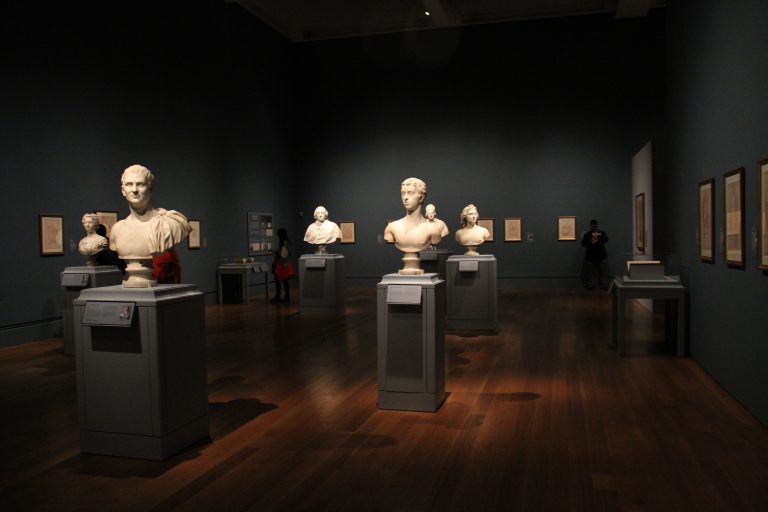
Sometimes two very different paintings look good next to each other because their contrast creates something unexpected. Other times, similar artworks need a little space from one another so each has room to breathe.
There’s no one-dimensional formula for it. It’s a dialogue between the artwork and the space.
Giving each work of art its moment
Imagine you walk into a room where every painting is large, colorful, and placed close to one another.
There might be a lot to take in, but where do you begin?
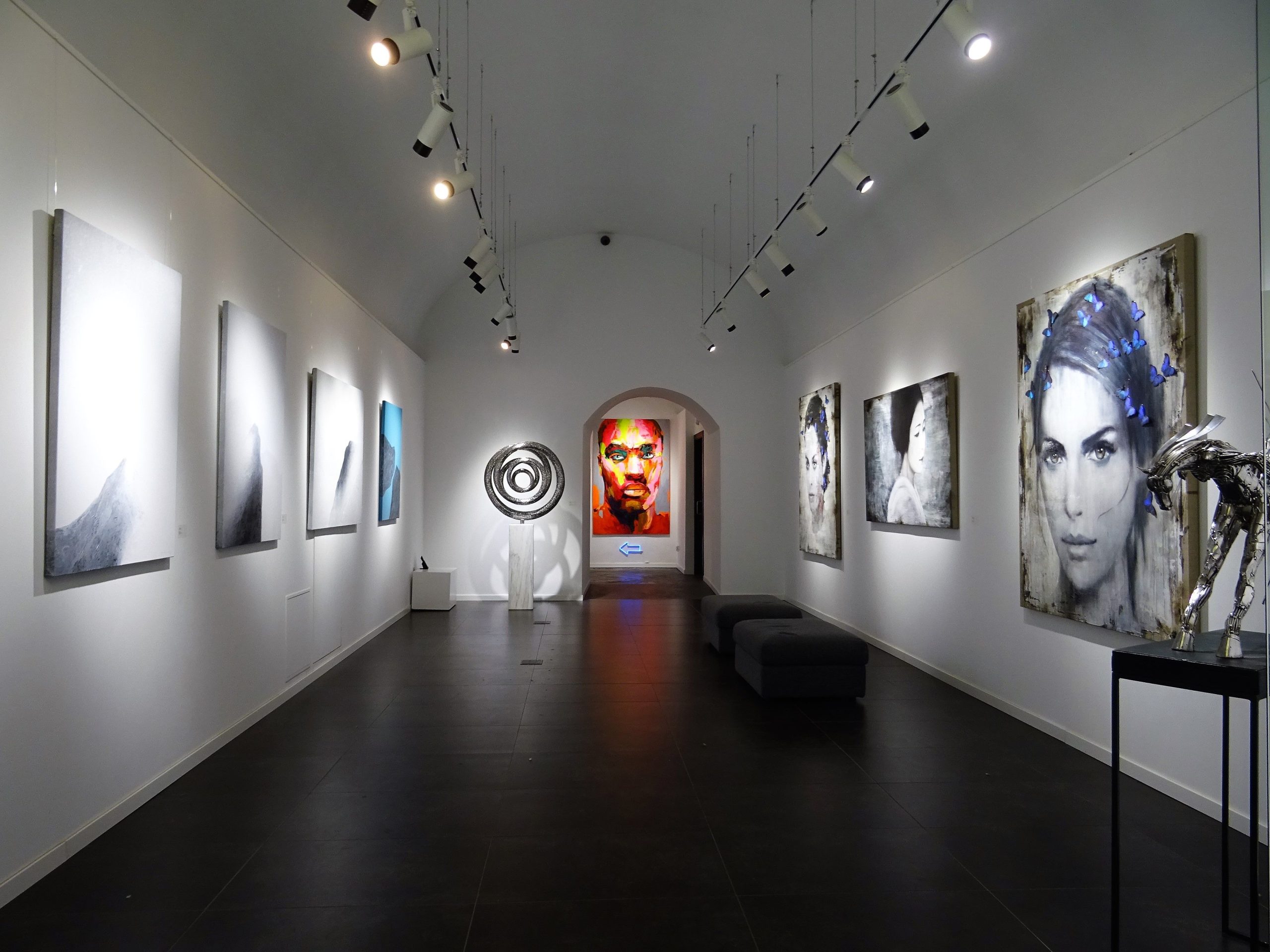
Now imagine that same room, with a little more space between the artworks. One painting catches your eye from across the room. You move toward it. You notice the details. Then, as you step back, another painting begins to speak to you.
This small difference in placement can completely change the experience.
That’s why empty space matters.
An empty section of wall doesn’t necessarily need to be filled. Sometimes, that’s what makes a single piece of art stand out.
Just as silence can make music more powerful, space can make art more powerful.
Creating a Visual Journey
A well-curated exhibition should feel like a journey.
As visitors move through the gallery, we want their eyes to naturally travel from one piece to the next. There might be an opening piece that introduces the exhibition, a quiet piece that encourages contemplation, and a powerful piece placed to create a memorable moment.
This arrangement creates a kind of visual rhythm.
Some moments are vibrant.
Some are quiet.
Some surprise you.
And some make you linger longer than you expected.
This rhythm is part of the curatorial process. We’re not just filling walls—we’re thinking about how a person will move through the space and experience the entire exhibition.
Why Size and Scale Matter
Placement also changes our perception of scale.
A small painting placed next to a large artwork can suddenly feel even more intimate. Giving a large painting an entire wall can make it feel grand.
The same artwork can exist completely differently depending on what is around it.
That’s why we spend so much time experimenting during the installation.
A painting might look perfect in the studio, but once it’s on the gallery wall, something might feel a little off. Maybe it needs more space. Maybe it would look better next to another piece of art. Maybe just moving it a few inches one way or the other will change everything.
Sometimes the smallest adjustment makes the biggest difference.
The details visitors rarely notice
Most of the work that goes into organizing an exhibition becomes invisible when the doors open.
We measure the walls. We consider sightlines. We move artworks around, step back, look again, and sometimes rearrange them completely.
We think about lighting, height, distance, and how the artworks relate to one another.
And then there’s the most important test:
How does it feel when you stand in the room?
This question can be difficult to measure, but it matters.
An exhibition should feel thoughtful without feeling overly organized. Visitors don’t need to be aware of every curatorial decision. Ideally, they just feel at ease in the space and explore the artworks at their own pace.
When everything finally falls into place
There’s a special moment during installation when suddenly everything starts to make sense.
The walls are no longer empty. The artworks are in their place. The spacing feels right. The lighting falls into place, too.
You take a step back and see the exhibition as a whole story, rather than a collection of individual pictures.
That’s the moment we work for.
Because arranging art isn’t just about making a gallery look beautiful. It’s about creating relationships—between the artworks, between the space and the viewer, and between the stories each piece tells.
The next time you visit a gallery, take a moment to look beyond the artwork.
Notice what’s next to it.
Notice the space around it.
Notice what you look at first and where your eyes go next.
You might find that the gallery was quietly guiding your journey all along.