At the dawn of the 20th century, the world was changing at an unprecedented pace. Cities were expanding, technology was reshaping everyday life, and long-held traditions were being questioned. Automobiles replaced horse-drawn carriages, airplanes took to the skies, and photography had already challenged painting’s role as the primary way to capture reality. Artists found themselves asking a difficult question: if a camera could reproduce the world exactly as it appeared, what should painting do instead?
The answer came in the form of one of the most revolutionary art movements in history—Cubism.
Rather than trying to imitate reality, Cubist artists chose to rethink it entirely. They abandoned centuries of artistic conventions and introduced a radically new way of seeing the world. Instead of painting an object from a single viewpoint, they broke it apart, examined it from multiple angles, and reconstructed it on the canvas. It wasn’t about distortion for its own sake; it was about revealing a deeper understanding of form, space, and perception.
Before Cubism, Western art largely followed the principles of perspective developed during the Renaissance. Paintings were designed to create the illusion of looking through a window into another world, with depth, proportion, and a fixed viewpoint carefully maintained. While these techniques produced stunningly realistic images, they also limited artists to showing only one side of an object at a single moment in time.
Cubism challenged that limitation.
Imagine holding a guitar in your hands. As you examine it, you naturally move your eyes from the front to the side, notice the curve of the body, the strings stretching across the sound hole, and the neck extending away from you. Your understanding of the guitar comes from many different viewpoints combined in your mind. Cubist artists sought to capture that complete experience rather than freezing a single angle.
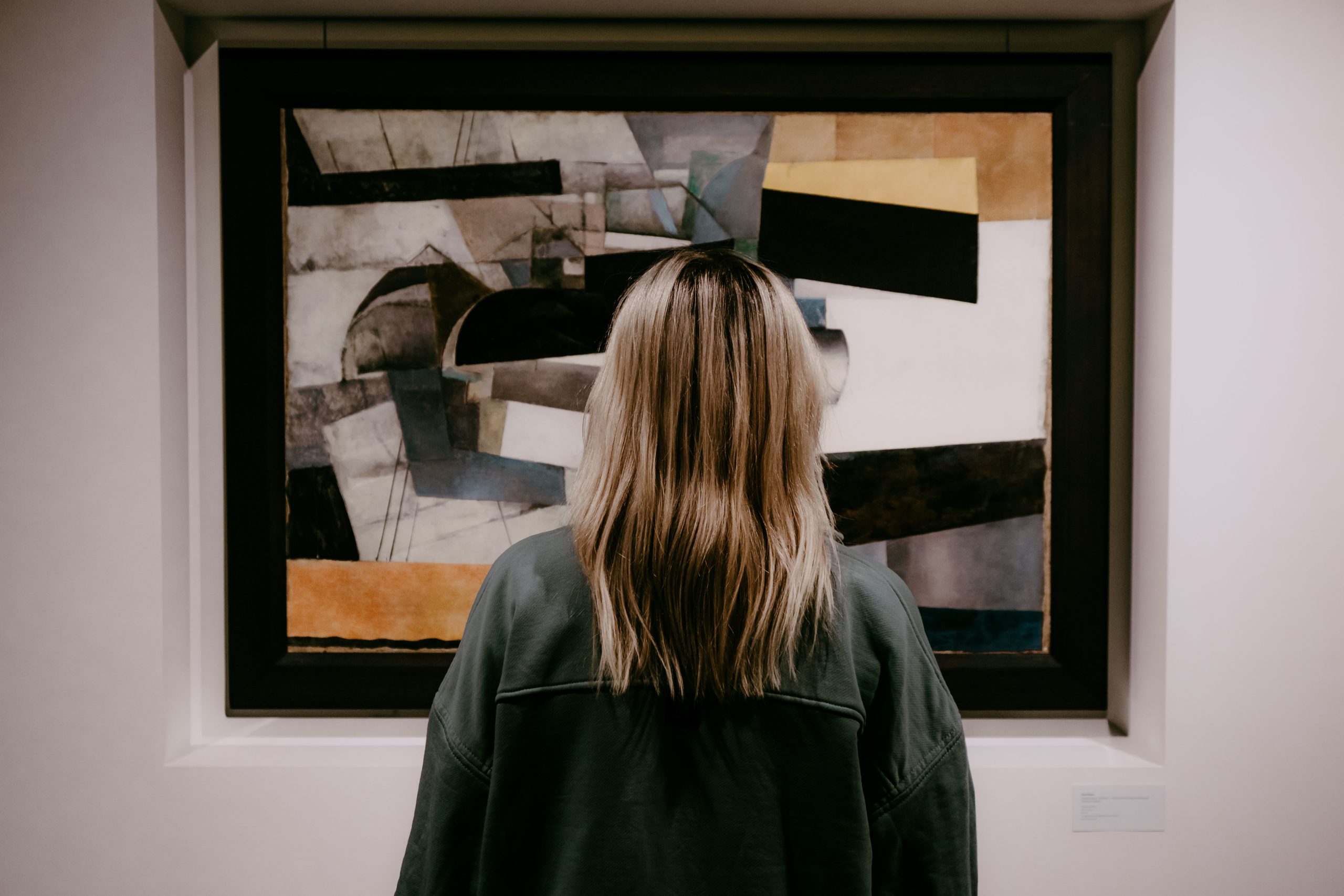
This idea transformed ordinary subjects into fascinating geometric compositions. Faces, bottles, musical instruments, and city streets were fragmented into overlapping planes, sharp angles, and intersecting shapes. Objects appeared to unfold across the canvas, inviting viewers to explore rather than simply observe.
To someone seeing Cubism for the first time, the paintings could seem confusing or even chaotic. Yet beneath the fractured surfaces lies remarkable structure. Every line and shape serves a purpose, carefully arranged to guide the viewer through multiple perspectives simultaneously. The paintings ask us to slow down, look closer, and actively participate in understanding what we see.
Color also took on a different role. Early Cubist works often relied on muted browns, grays, and earthy tones. By limiting bright colors, artists directed attention toward form and composition rather than decoration. Shape became more important than surface appearance, allowing the viewer to focus on the relationships between objects rather than their visual details.
As the movement evolved, Cubism became even more experimental. Artists began incorporating newspaper clippings, wallpaper, sheet music, and other everyday materials directly into their compositions. This innovative approach blurred the line between painting and reality, giving birth to collage as a respected artistic technique. Suddenly, art was no longer confined to paint alone—it could include pieces of the real world itself.
Although Cubism initially shocked critics and audiences, its influence spread far beyond the walls of galleries. The movement inspired architects, sculptors, graphic designers, photographers, and even filmmakers to think differently about space and composition. It proved that art didn’t need to imitate reality to communicate truth; instead, it could interpret reality through ideas, structure, and imagination.
Perhaps Cubism’s greatest achievement was changing the way people looked at the world. It encouraged viewers to recognize that every object, person, or place can be understood from multiple perspectives. In many ways, this philosophy extends beyond art itself. It reminds us that there is rarely a single way to see something and that complexity often reveals a richer truth than simplicity.
Today, the influence of Cubism is woven into contemporary art and design. Geometric abstraction, modern illustration, graphic design, architecture, and digital art all borrow ideas first explored by Cubist pioneers. Even artists who never paint fragmented faces or angular landscapes continue to build upon Cubism’s central insight: creativity begins when we question the assumptions we’ve inherited.
More than a century after its emergence, Cubism remains one of art’s boldest revolutions. By breaking objects apart, artists didn’t destroy reality—they expanded it. They invited us to see beyond appearances, embrace multiple perspectives, and discover that sometimes the most profound way to understand the world is to look at it from every possible angle.